


Vietnam Marble Slabs: Thickness, Supply & Buying Guide

Introduction
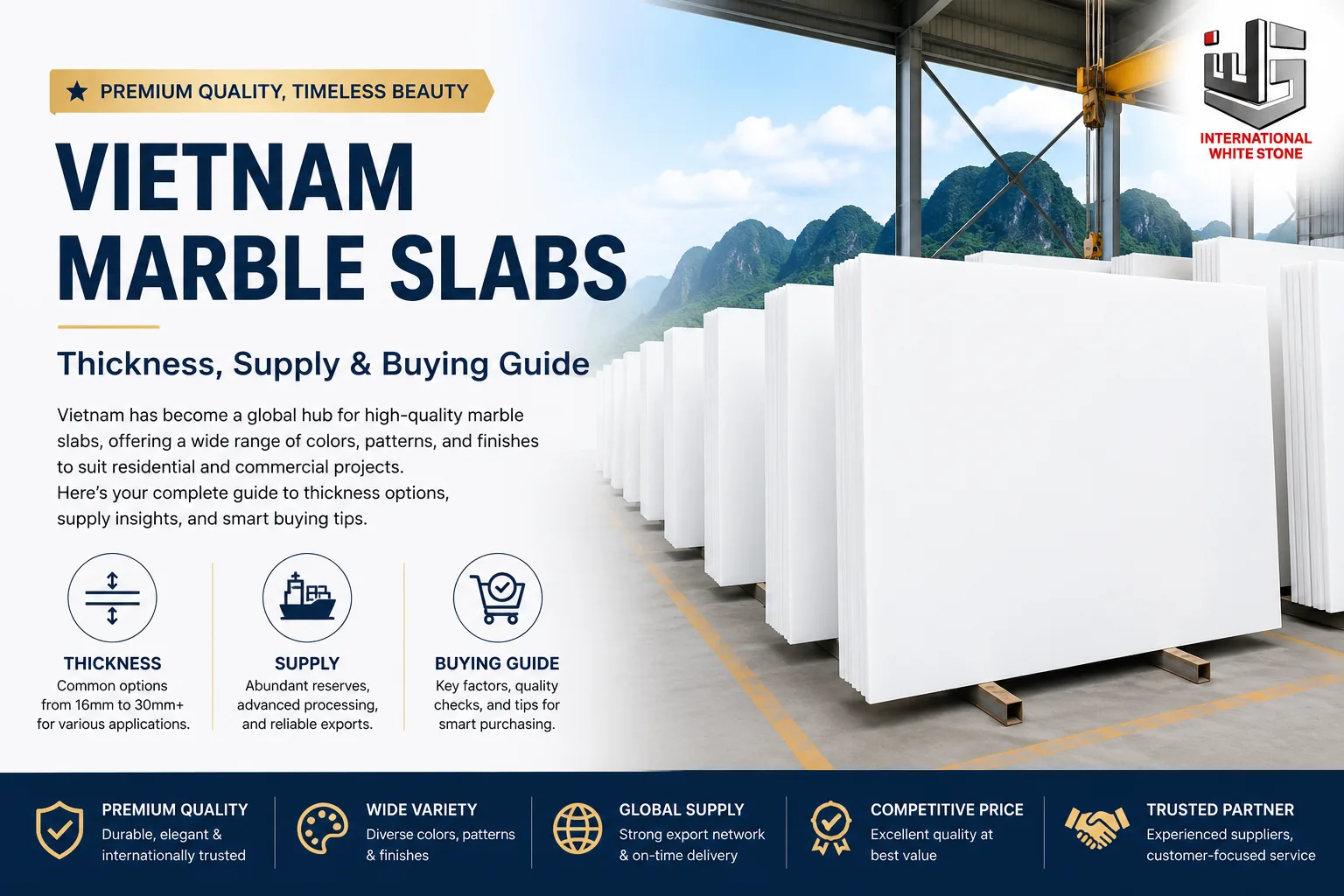
Vietnam marble slabs are one of the most requested natural stones in the global interior and construction market today. Architects and fabricators choose this stone for its bright, near-pure white background, tight crystalline structure, and minimal veining — qualities that are harder to find in white marble from other origins. If you’re sourcing this stone for a project, thickness availability and lead time usually decide whether a supplier is worth working with. This guide breaks down exactly what’s in stock, what’s made to order, and how to buy with confidence — based on the ready-stock program run by International White Stone (IWstone), a specialist supplier of Vietnam marble. You can get to know more about the brand and its full product range at www.iwstone.com.
Why Vietnam Marble Stands Out
Vietnam marble is quarried mainly from the Luc Yen and Quy Hop regions in northern Vietnam, areas known for producing dense, low-porosity marble blocks. Compared to marble from other regions, it offers:
- A brighter, whiter base tone with fewer grey or beige undertones
- A tighter crystal structure, which improves polish quality and light reflection
- Good workability, allowing clean edges, bookmatching, and CNC detailing
- Consistent block supply, since Vietnamese quarries are actively producing at scale
This combination is why the stone is now a standard specification for luxury villas, hotel lobbies, and high-end bathroom vanities.
Vietnam Marble Slab Thickness: What’s Ready vs. Made to Order
One of the biggest sourcing headaches in the marble trade is thickness availability. Most suppliers only hold one or two thicknesses in stock and quote long lead times for anything else. At International White Stone, the following white marble slab thickness options are held as ready stock, available for immediate dispatch:
- 30mm – standard for wall cladding and light-duty flooring
- 40mm – common for flooring, stairs, and skirting
- 50mm – widely used for countertops, heavy-traffic flooring, temple work, carving work, and sculptures
- 75mm – preferred for waterfall countertop edges and statement islands
- 100mm – used for solid furniture pieces, thick countertop profiles, and sculptural applications
Custom Thickness on Order
Any thickness outside this range can still be processed and dispatched within 2 working days. This is possible because International White Stone maintains raw block and semi-processed slab inventory in Vietnam, so cutting to a non-standard thickness doesn’t require a new quarry order — it’s a fast, in-house gang-saw operation.
Practical tip: If your project spec calls for an unusual thickness (say 20mm or 60mm), confirm with your supplier whether they’re cutting from existing block stock or waiting on a fresh quarry allocation. The difference is often 2 days versus 6–8 weeks.
How to Choose the Right Slab Thickness
Thickness isn’t just a cosmetic decision — it affects structural performance and cost.
- Flooring (residential): 20–30mm is sufficient for most interior floors with proper substrate support.
- Flooring (commercial/heavy traffic): 40–50mm reduces the risk of cracking under load.
- Countertops: 30mm is standard; 50mm+ is chosen for a heavier, more premium look or when a mitred waterfall edge is needed.
- Cladding and facades: 20–30mm keeps weight manageable for wall-mounted installation.
- Carving & Sculpture: 50mm is the entry point for shallow relief work, temple panels, and decorative motifs; 75–100mm is needed for deep-relief idol carving, freestanding statues, and sculptural pieces where the design has to be cut well into the stone without weakening it. The deeper and more intricate the carving, the more uncarved “backing” thickness the piece needs to stay structurally sound.
Expert insight: Over-specifying thickness increases material cost, shipping weight, and installation labor without adding real durability in most residential applications. A 50mm countertop and a 30mm countertop with a laminated (built-up) edge look identical once installed, but the laminated option cuts material cost significantly. Always ask your fabricator whether a laminated edge can achieve the same visual thickness before committing to a thicker slab.
Specialised Applications: Wall Panels, Wall Murals & CNC Temple Carving
Beyond flooring and countertops, the heavier end of the white marble slab thickness range — 50mm to 100mm — is what makes Vietnam marble suitable for detailed, sculptural, and load-bearing decorative work. These applications need depth for the material to be carved, backlit, or mounted without cracking.
Wall Panels
Marble wall panels are used as feature walls in lobbies, reception areas, and residential living spaces. 50mm is the common starting point for panels that will be CNC-routed with a raised or recessed pattern, since thinner slabs risk breaking through at the deepest cut points during machining.
Wall Murals
Large-format wall murals — where multiple bookmatched or CNC-engraved slabs are joined to form a single continuous image or pattern — need consistent thickness across every panel for the joints to sit flush. 50mm to 75mm is typically specified so the mural can be transported and installed as rigid, self-supporting units rather than thin veneer that needs full substrate backing.
CNC Machine Temple Carving
Temple carving is the most demanding application for slab thickness. Deities, floral motifs, and deep relief patterns are cut using CNC machines that remove significant material from the face of the slab — in some designs, up to 30–40mm of depth. This is where 75mm and 100mm slabs are essential:
- 75mm – suitable for medium-relief temple panels, pillars, and door frames with moderate carving depth
- 100mm – used for deep-relief idol carving, temple domes, and freestanding sculptural elements where the design needs maximum material to work with
Expert recommendation: Always confirm carving depth with your CNC operator before ordering slab thickness. A good working rule is to keep at least 25–30mm of solid, uncarved material behind the deepest point of the design — this prevents hairline cracking during machining and keeps the panel structurally sound after installation.
Pros and Cons of Vietnam Marble
Pros
- Consistently bright white tone across batches
- Strong polish retention
- Reliable block supply and competitive pricing versus Italian or Greek white marble
- Suitable for both interior and select exterior applications
Cons
- Like all marble, it is porous and requires periodic sealing
- Susceptible to etching from acidic substances (lemon juice, vinegar, certain cleaners)
- Not recommended for high-acid kitchen prep areas without regular maintenance
Sourcing from a Vietnam Marble Supplier: What to Check
Not every Vietnam marble supplier offers the same reliability. Before placing an order, verify:
- Stock proof – ask for current warehouse photos or video of the exact thickness you need
- Batch consistency – request samples from the same block lot you’ll be shipping, since marble veining and tone can vary block to block
- Vietnam marble slab price transparency – get a per-square-meter quote broken down by thickness, finish, and shipping terms (FOB vs. CIF)
- Lead time guarantees in writing – especially important for project deadlines
- Export documentation experience – confirms the supplier regularly ships internationally without customs delays
International White Stone (IWstone) specializes in ready-stock Vietnam marble supply for exporters, contractors, and fabricators worldwide, which is why maintaining five in-demand thicknesses at all times — rather than a single default size — is central to how the business operates. Get to know more about the brand, its quarry partnerships, and its full slab inventory at www.iwstone.com.
Vietnam Crystal White Marble vs. Standard Vietnam Marble
Buyers often ask about the difference between standard Vietnam marble and Vietnam crystal white marble. The crystal variety has a slightly more sparkling, glass-like crystal structure and an even brighter white base, making it a premium-tier option often used for feature walls, reception counters, and backlit onyx-style panels. Standard white marble remains the more cost-effective choice for large-format flooring and general cladding.
Conclusion
Choosing the right Vietnam marble slabs comes down to two things: getting the correct thickness for your application, and working with a supplier who can actually deliver it on time. With 30mm, 40mm, 50mm, 75mm, and 100mm held as ready stock, and every other thickness processed within 2 days, International White Stone removes the biggest bottleneck in marble sourcing — waiting. Whether you’re specifying slabs for flooring, countertops, or a full facade, confirm stock availability first; it will save you weeks on your project timeline.
To view live stock, block photos, and full slab specifications, visit www.iwstone.com.
Why Choose IW Stone
At IW Stone, we supply premium Vietnam marble with assured quality, competitive pricing, and worldwide delivery support for residential and commercial projects.
Company: International White Stone (IW Stone)
Address: Khasra No. 9/1, Plot No. 4, Makrana Road, Industrial Area, Madanganj Kishangarh, Ajmer, Rajasthan 305801
Phone: +91 9555533636 / +91 8875533636
Email: sales.@iwstone.com
We provide direct supply at the best price, ensuring premium quality and timely delivery worldwide.
Whether you need marble for a residence, commercial project or export requirement, IW Stone helps you choose the right solution in the Vietnam Marble journey.
Frequently Asked Questions
1. What thicknesses of Vietnam marble slabs are available in ready stock? 30mm, 40mm, 50mm, 75mm, and 100mm are held in ready stock at all times at International White Stone (IWstone). Other thicknesses are processed and dispatched within 2 working days. See current stock at www.iwstone.com.
2. What is the best use of 50mm, 75mm, and 100mm thickness? This thickness range is best suited for wall panels, wall murals, and CNC machine temple carving. The extra depth gives the stone enough material for detailed relief work, raised patterns, and sculptural carving, making 50mm–100mm slabs a popular choice for statement pieces that enhance the look of a home — from feature walls and murals to temple panels and decorative sculptures.
3. How long does it take to get a custom thickness of Vietnam marble? Custom or non-standard thicknesses are typically processed within 2 days when cut from existing block stock, compared to 6–8 weeks for a fresh quarry order.
4. What is the difference between Vietnam marble and Vietnam crystal white marble? Vietnam crystal white marble has a finer, more reflective crystal structure and a brighter base tone, making it suited to feature applications, while standard white marble is more economical for large-scale flooring and cladding.
5. Does Vietnam marble need special maintenance? Yes. Like all natural marble, it should be sealed periodically and protected from acidic substances to prevent etching and staining.
6. What thickness is best for CNC temple carving and wall murals? 75mm is suitable for medium-relief temple panels and wall murals, while 100mm is recommended for deep-relief idol carving and freestanding sculptural pieces. A minimum of 25–30mm of solid backing material behind the deepest carved point is recommended to prevent cracking.